
Introduction
As the third generation of a family of antiques dealers, specialists in French regional furniture and furniture from the great trading ports for over forty years, and experts in 18th-century French furniture, we have pursued our profession with the same exacting standards for decades.
Through our website, established as early as 1998, we welcome French and international clients. We receive visitors exclusively by appointment, in the privacy and tranquillity of the Manoir des Orières: knowledgeable enthusiasts, collectors, fellow dealers and private individuals wishing to discover furniture selected with the utmost care.
Through our discoveries, we bring together a deliberately limited selection of exceptional pieces of furniture.
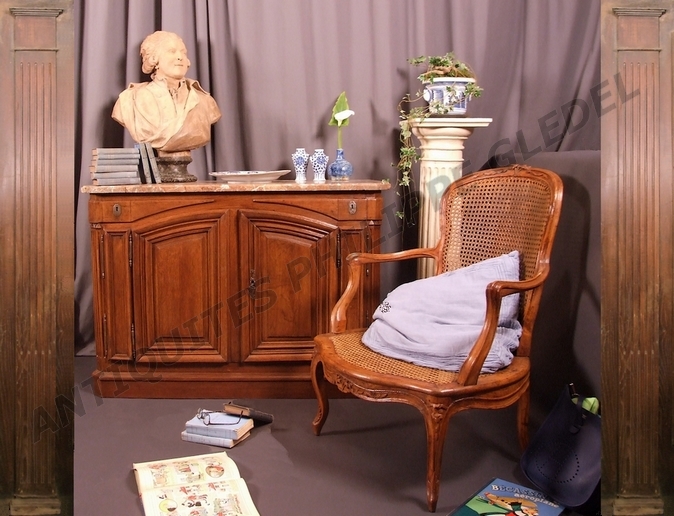
A Passion and a Profession
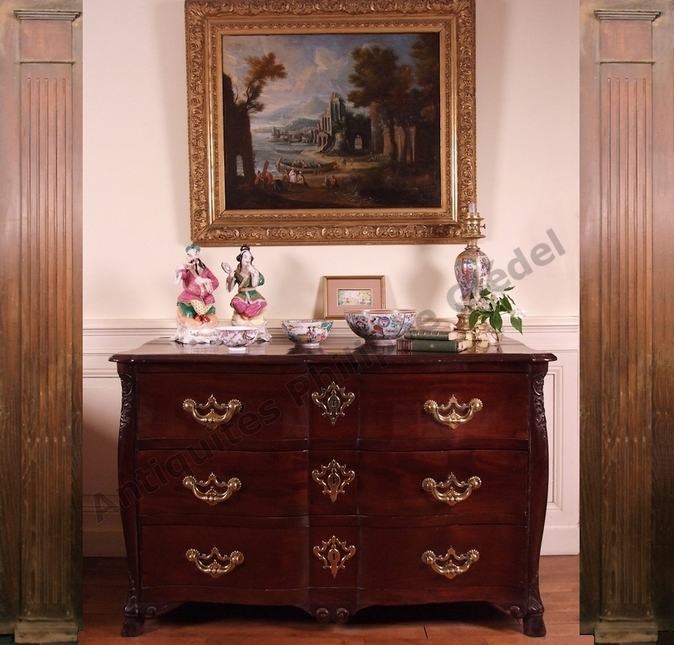
We have a particular affection for furniture made in the great Breton ports of Landerneau, Saint-Malo and Nantes, as well as in Bordeaux and La Rochelle. We also present some of the finest furniture from the Rennes region and many other French provinces: Île-de-France, Upper and Lower Normandy, Burgundy, Provence and Dauphiné.
Our search naturally extends to 18th-century Parisian furniture, particularly pieces from the reign of Louis XIV and the Régence period, and occasionally to European furniture inspired by French designs, selected only when it meets the same standards of quality.
Every piece undergoes a particularly rigorous selection process before being entrusted to the finest craftsmen.
Master cabinetmakers, joiners, woodcarvers, gilders, bronze chasers and gilders, and upholsterers each contribute their specialist skills, with absolute respect for traditional techniques. For furniture in solid, unveneered wood, we often undertake the wax finishing ourselves, using products from Maison Dugay in Paris.
For the most important pieces, we personally undertake delivery, free of charge, throughout France and neighbouring countries. Every piece is accompanied by a detailed certificate of expertise, presented to its purchaser.

Photographs of our furniture have appeared
in specialist books and magazines, including:
Art et Décoration: no. 358
France-Antiquités: no. 80
Menuisiers et mobilier du pays de Rennes: Gwenaël Baron / Éditions Apogée
Ar Men: no. 88
Art et Décoration: no. 408
France-Antiquités: no. 168
Si le Meuble nous était conté...: no. 9
France-Antiquités: no. 188
The Upper Canadian: no. 29
Le mobilier breton: Éditions Coop Breizh
Le Chineur: no. 148
La Loire et ses terroirs: no. 85
La Loire et ses terroirs: no. 86

Our Speciality
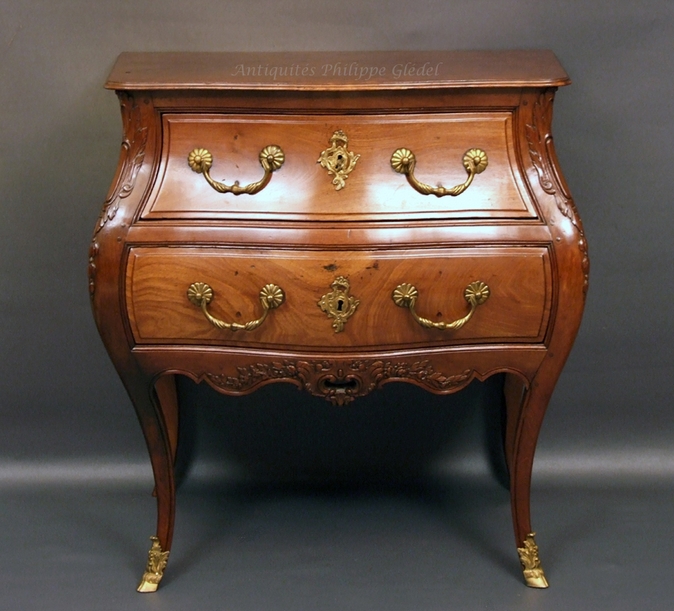
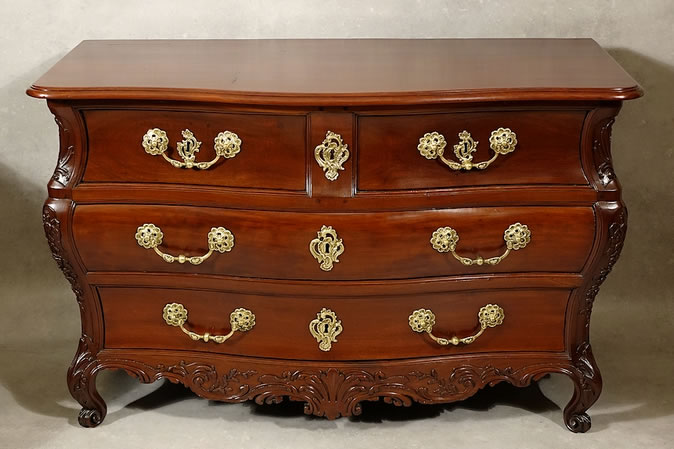
Our gallery specialises in French regional furniture, with a particular preference for solid mahogany furniture from the great trading ports, especially pieces made in Nantes, Landerneau, Saint-Malo, Bordeaux and La Rochelle. We are also particularly interested in commodes scribannes (chests of drawers incorporating a writing desk), slant-front bureaux, long Nantes sideboards and cabaret tables.
Our taste naturally draws us towards the great French provinces which produced some of the finest furniture of the 18th and 19th centuries. The Rennes region holds a particularly important place in this pursuit, alongside Normandy, the Bordeaux region, Île-de-France, Burgundy, Dauphiné and Provence.
We favour furniture in the Régence and Louis XV styles, sometimes dated or signed, made from the finest woods — wild cherry, cherry, walnut or oak — representing some of the most remarkable achievements of French joinery and woodcarving.
In our gallery, a wardrobe from Rennes may stand beside one from Normandy, while a Bordeaux chest of drawers finds its natural counterpart in a Provençal example. What unites these pieces is not their geographical origin, but the excellence of their craftsmanship.
Hunting sideboards and large monastery or château tables of the 17th and 18th centuries also occupy a special place in our selection.
We also present Parisian veneered and marquetry furniture by distinguished cabinetmakers, together with works by the Hache family of Grenoble, which we are pleased to complement with seating from the Régence, Louis XV, Transition and Louis XVI periods.

Our Independence
The Internet enabled us to introduce our work to a wider audience at a very early stage. Our website, established in 1998, was among the first French websites devoted to antiques. From its beginnings in 2001, we also took part in the adventure of the first antiques dealers' website, before choosing to follow our own path.
Our independence has always led us to place quality above visibility.
Although we remain present on Anticstore, we have withdrawn from certain platforms when we felt they no longer met the standards of seriousness, accuracy and professional ethics to which we are committed.
Among other absurdities, we even encountered a supposed "occasional table stamped Lacroix", bearing a fleur-de-lys, inventory numbers and, written out in full, the words "Château de Saint-Cloud"... All that was missing was a photograph of the Duke of Orléans taking tea with the Marquise de Montesson, thoughtfully attached to this table which, by all the saints, was hardly worth a nail!
For our part, we prefer to offer fewer pieces, but to present them accurately.
To describe precisely rather than merely to entice.
To attribute with certainty rather than to speculate.
And to forgo a sale rather than accept an approximation.
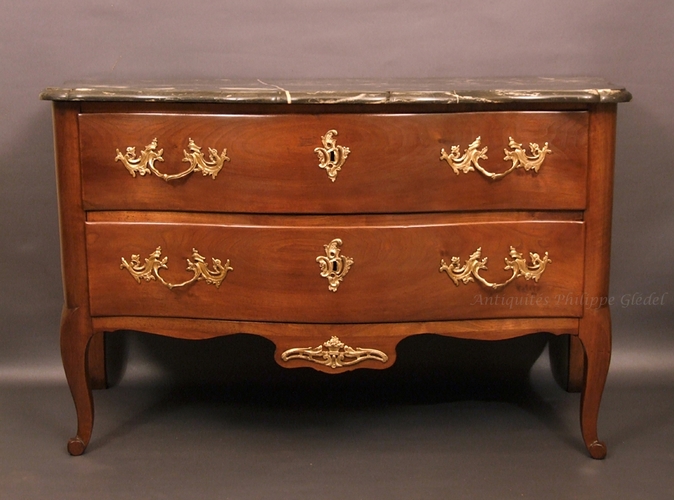
Our Approach to the Antiques Trade
We receive visitors by appointment only, so that we can make ourselves available on the day and at the time most convenient to each of them.
We do not display prices for our furniture. You need only ask us, by email or, better still, by telephone. This discretion sometimes comes as a surprise, since some assume that a dealer who does not publish prices must necessarily charge high prices. Our experience very often leads us to observe quite the opposite.
Our background is first and foremost that of a dealer. For more than twenty years, we worked exclusively within the antiques trade, offering furniture in the condition in which it was discovered. For many years now, however, we have presented our clients with furniture meticulously restored according to the highest standards of craftsmanship.
We have recently seen a growing practice of selling furniture to private buyers "as found" or "in its original condition", with this presented as a guarantee of authenticity. This development does not correspond to our understanding of the profession.
We have always preferred to offer our clients honest, authentic furniture, restored down to the smallest detail — including the parts that cannot be seen — accurately described, presented without artifice and offered at a carefully considered, fair price.
This is our greatest source of pride.
As the cabinetmaker Jean-François Hache once put it:
"All at a fair price."
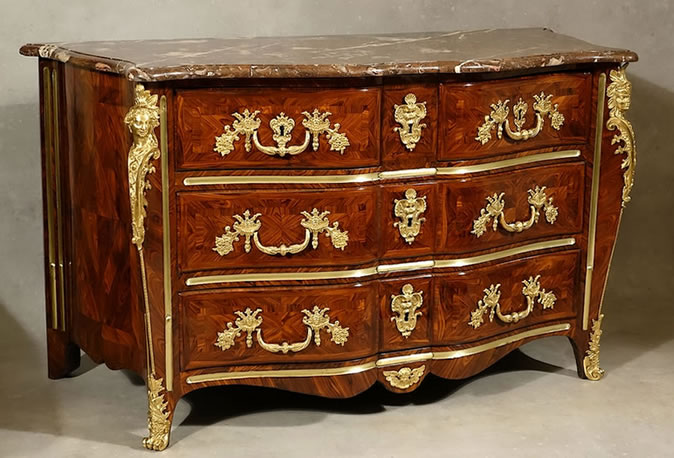
A Certain View of the Antiques Trade
Over the years, we have read and heard all manner of opinions about the art and antiques market. There is no shortage of analyses, but they are sometimes far removed from the everyday realities of the profession. Our experience with antique furniture, auctioneers, experts, collectors and enthusiasts has taught us that, in the antiques trade, certainty is acquired more through practical experience than through commentary.
Among the many texts devoted to this subject, there is one with which we wholeheartedly agree. In just a few lines, it expresses remarkably well the essence of our own view of the profession.
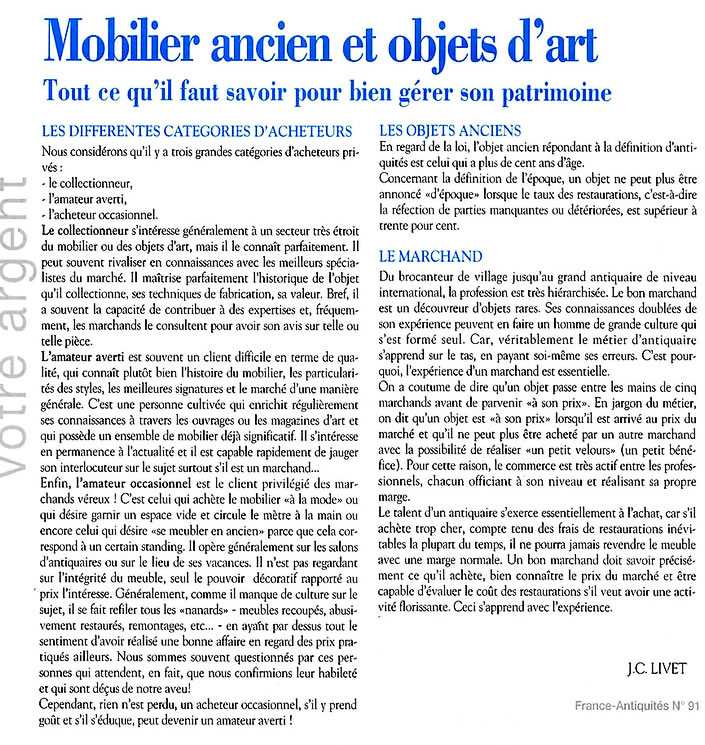
If we were to add just one thought, it would be
the one that has guided us throughout our career.
The familiar saying goes: "The price is forgotten, but quality remains."
Our venerable grandmother, with the good sense characteristic of her generation, put it rather differently:
"Rubbish is always too expensive."